Tracing Box: A Creative Font for Education
In the world of modern typography, function often dictates form, but rarely does a typeface bridge the gap between utility and visual delight quite like Tracing Box. If you are a designer, educator, or content creator working with early learners, you know the struggle of finding materials that are both engaging and pedagogically sound. Tracing Box is a specialized premium font set designed specifically to aid children in remembering word spellings. It transforms the often tedious task of learning to write into a structured, visual game. Unlike standard sans serif fonts or serif fonts used in textbooks, this typeface integrates the learning mechanism directly into the letterforms, offering a unique solution for educational design.
The Anatomy of Learning: Inside the Tracing Box Design
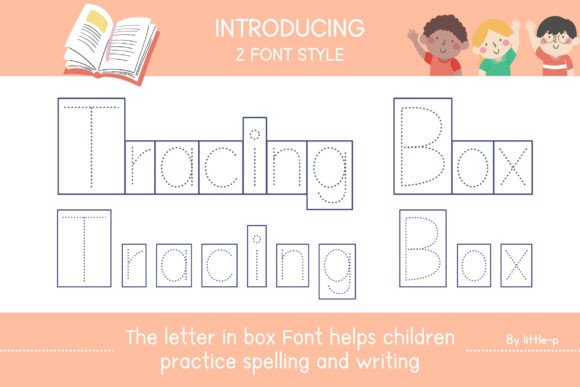
At its core, Tracing Box functions as a display font that prioritizes legibility and spatial awareness. The defining characteristic of this creative font is its treatment of individual letters. Each glyph is designed to sit within a defined boundary—essentially a "box"—which helps young learners understand the proportions and placement of letters on a line. This approach is vital for developing fine motor skills and handwriting consistency. It is not just a handwritten font; it is a structured framework for literacy.
The font set includes two distinct styles that cater to different stages of the learning process:
- Tracing Box Regular: This style provides the solid letterforms within the squares, ideal for reading practice and letter recognition. It establishes the visual baseline for what the finished word should look like.
- Tracing Box Space: This variation offers a segmented or dotted structure, specifically designed for students to trace over. It guides the hand, allowing children to practice the motion of writing without the intimidation of a blank page.
The aesthetic is clean, geometric, and friendly, avoiding the rigidity of standard grid paper while maintaining the necessary structure for learning. It strikes a balance between a playful display font and a functional teaching tool.
Practical Applications: From Classroom to Commercial Projects
While many design assets are created for broad commercial use, Tracing Box carves out a specific, high-value niche. Its utility extends far beyond simple flashcards. For entrepreneurs in the educational sector, this font is a cornerstone for creating high-quality learning materials.
Educational and Print Publishing
If you are designing workbooks, homeschool curricula, or kindergarten activity sheets, Tracing Box streamlines the production process. Instead of manually drawing guides in Adobe Illustrator or InDesign, you can simply type out your content. This ensures consistency across every page of a publication. It is perfect for:
- Worksheets and Homework: Create standardized tracing exercises for spelling and vocabulary.
- Handwriting Practice: Use the "Space" style to help students master cursive or print letterforms.
- Interactive Books: Design workbooks where children write directly into the designated boxes.
Digital and Web Design
In the realm of web design and digital content, Tracing Box offers a unique visual texture. Educational bloggers and course creators can use this font to create downloadable PDFs or interactive digital worksheets for tablets. When used in social media graphics, the font’s distinct grid structure creates an immediate visual association with "learning" or "school," making it an effective choice for marketing educational apps or tutoring services. It communicates a message of structured learning instantly, aiding in brand recognition.
Creative and Commercial Branding
Beyond the classroom, the font’s quirky, grid-based aesthetic works surprisingly well in specific brand identity projects. Brands targeting children’s products—such as toy manufacturers, kids' clothing lines, or stationery brands—can leverage the playful geometry of Tracing Box in their logo design or packaging design. It conveys a sense of organization and fun, appealing to parents who value educational play.
Strategic Design: Integrating Tracing Box into Your Workflow
Adopting a new commercial font requires more than just installation; it requires strategy. To get the most out of Tracing Box, consider how it interacts with other elements in your layout. Because it is a highly stylized display font, it commands attention. It is generally best suited for headlines, activity titles, or the main body of tracing exercises rather than long-form instructional text for adults.
Font Pairing and Visual Hierarchy
Effective font pairing is essential when using a niche typeface. Since Tracing Box is geometric and structured, it pairs well with softer, more organic fonts for supporting text. Consider pairing it with a friendly script font for titles or a clean, rounded sans serif font for instructions. This contrast creates a clear visual hierarchy, ensuring that the tracing elements stand out while the instructions remain easy to read for the supervising adult.
When evaluating your project fit, ask yourself:
- Does the target audience require guided writing assistance?
- Is the visual tone of the project playful and educational?
- Do I need to ensure uniformity across hundreds of spelling words?
Technical Considerations and Licensing
For designers and small business owners, the technical integrity of a font is non-negotiable. Tracing Box is designed with the professional in mind, ensuring that the "boxes" align perfectly regardless of the letter combination. This attention to detail saves hours of manual kerning and alignment adjustments.
Before finalizing your purchase or project plan, always review the licensing terms. As a premium font, Tracing Box typically comes with a license that covers both personal and commercial use, allowing you to sell the worksheets and materials you create. However, if you are developing an app or a web-based tool where the font files are embedded, you will want to verify that the license supports webfont or app usage.
Ultimately, Tracing Box is more than just a collection of letters; it is a functional tool that enhances the educational experience. By integrating the tracing guides directly into the typeface, it empowers designers to create better, more effective learning resources with greater efficiency. Whether you are a teacher creating a daily spelling quiz or a publisher designing a comprehensive literacy curriculum, this font offers a practical, visually consistent, and engaging solution. It represents the best of modern typography—where design serves a distinct, human purpose.